Built From the Ground Up: How Four Guys From Pasadena Turned a Parking Lot Into a Movement
Somewhere in Southern California, probably around 1974 or 1975, a neighborhood got louder than it expected to be. Van Halen — still years away from a record deal, still playing under various names, still figuring out exactly what they were — was doing what they always did: showing up and playing. Hard. For anyone who'd listen.
That's where this whole thing started. Not in a label boardroom. Not in a Rolling Stone feature. In somebody's backyard, or a rented hall, or a high school gymnasium that smelled like industrial cleaner and teenager. The community that became the Van Halen fanbase was built on that foundation, and it never fully left it behind.
The Pasadena Circuit: Where Legends Are Made in Parking Lots
Before Sunset Sound, before Ted Templeman, before any of it, there was the Pasadena house party scene. The Van Halen brothers — Eddie on guitar, Alex on drums — had been playing together since they were kids, working through every influence they could get their hands on: Cream, the Kinks, Eric Clapton, whatever was on the radio. When David Lee Roth and Michael Anthony came into the picture, the band found the configuration that would eventually take over the world.
But first, they took over the San Gabriel Valley.
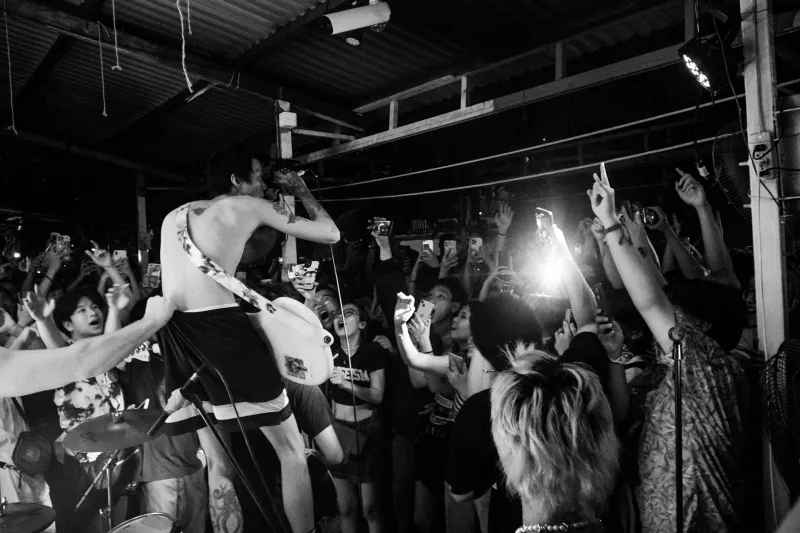
They played anywhere that would have them. Backyard parties. Local clubs. High school dances. The Pasadena Civic Auditorium. They built a following the old-fashioned way — by being impossible to ignore. Stories from people who caught those early shows describe something almost feverish: a band playing at a volume and energy level that seemed completely out of proportion to the venue. People who wandered in out of curiosity left as converts.
This is the origin point of the FanHalen spirit, really. The idea that Van Halen wasn't a product to be marketed but a phenomenon to be witnessed. You didn't become a Van Halen fan by reading about them. You became one by standing close enough to feel the speaker cabinets in your chest.
The DIY Ethos That Never Left
What set Van Halen apart from a lot of their contemporaries wasn't just talent — it was work ethic dressed up as pure fun. They rehearsed constantly, but it never looked like rehearsal. Eddie's gear was largely homemade. The set lists were built around what the crowd responded to, not what the band thought they should respond to. There was a feedback loop between the band and the audience that felt genuinely mutual.
That DIY mentality extended to how they approached the industry itself. When they finally landed their deal with Warner Bros. in 1977, they didn't suddenly transform into a polished, label-managed product. They brought Pasadena with them. Ted Templeman, to his enormous credit, recognized that the worst thing he could do was sand down the rough edges. So he didn't. What you hear on that debut album is a band that sounds like it's playing live in your living room — because they basically were.
The production budget was famously minimal. The sessions were fast. The attitude was: capture it before the energy dies. That philosophy produced one of the best-sounding rock records of the decade, and it came directly from the same instincts that made their backyard shows legendary.
Fans Who Felt Like Insiders
Here's the thing about Van Halen's early following that's easy to miss in retrospect: those fans felt chosen. Not in a snobby, gatekeeping way — the opposite, actually. Van Halen made everyone feel like they were in on something. Dave's banter from the stage was inclusive and ridiculous in equal measure. Eddie would wander into the crowd between sets. The whole operation had a we're-all-in-this-together vibe that most arena rock bands couldn't fake if they tried.
That connection was real, and it was noticed. Fans who saw them at small venues in 1977 and 1978 — before the debut even dropped — talked about it like a secret they'd been trusted with. By the time the album came out and the rest of America caught up, those early fans had a sense of ownership over the band that never entirely faded.
That's the thing about being there at the beginning. It marks you.
The Community That Scaled
As the band grew — and they grew fast, moving from club headliners to arena supports to full-scale touring juggernauts within a few years — something remarkable happened: the community didn't dilute. New fans arrived by the millions, but the culture the early adopters had established was sturdy enough to absorb them. The values were simple: love the music, show up for each other, argue passionately about set lists, and never apologize for caring too much.
That's the community FanHalen was built to serve. It's the same conversation that started in a Pasadena backyard, just with a larger guest list.
The lineup changed. The decades piled up. The band went through upheavals that would have destroyed lesser acts. But the core of it — the sense that Van Halen belonged to the people who loved them, not the other way around — held. It still holds.
Still Running
Every fan who posts a concert memory, every debate about the greatest Van Halen album, every kid who picks up a guitar because they heard 'Ain't Talkin' 'Bout Love' coming out of an older sibling's room — all of it traces back to those early shows. To four guys who showed up and played like everything depended on it, because for them, it did.
That's the origin story. And unlike a lot of origin stories in rock and roll, this one has the receipts.