Further Than Hard Rock: 10 Moments That Prove Van Halen's DNA Is Everywhere
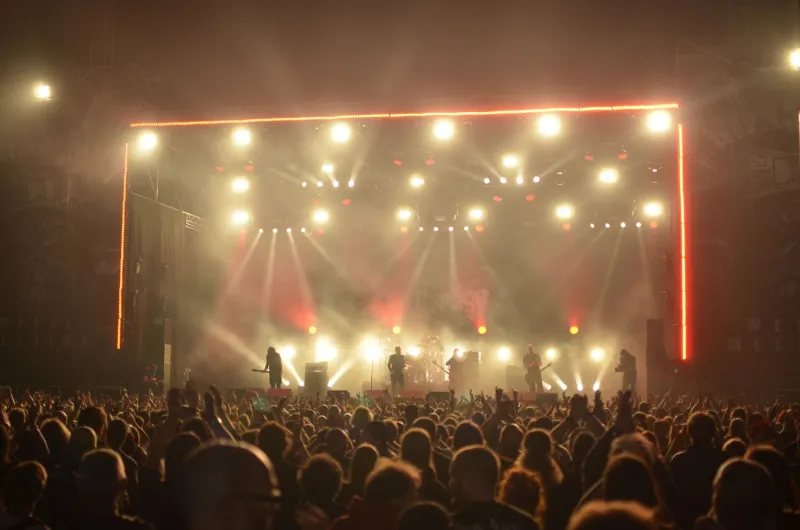
Here's a fun experiment: try to explain Van Halen to someone who's never heard them by naming a genre. Hard rock? Sure, mostly. Heavy metal? Sometimes. Pop? Absolutely, whether they wanted that label or not. Party music? Undeniably. The band never really fit cleanly into any single box, and that slipperiness is a big part of why their influence ended up spreading so much further than their core audience ever expected.
This isn't just a story about guitar players who got inspired. It's about how one band's energy, theatricality, and sheer sonic ambition seeped into corners of American music that had nothing to do with Marshall stacks or spandex.
1. Michael Jackson's Beat It (1982)
Let's start with the obvious one, because it's still kind of remarkable. When Quincy Jones needed a guitar solo that would give Beat It rock credibility without alienating Jackson's pop audience, he called Eddie Van Halen. Eddie showed up, recorded the solo in a single afternoon — reportedly for free, because he thought it would be fun — and the result became one of the most heard guitar performances in history.
The moment matters beyond the solo itself. It announced that Van Halen and rock guitar belonged in pop music, full stop. It gave an entire generation of pop producers permission to reach for that energy.
2. The MTV Era and the Reinvention of the Music Video
Van Halen didn't invent the music video. But the Jump clip in 1984 — charismatic, kinetic, visually playful — helped establish a template for what a rock band could do with the format. David Lee Roth's physical comedy and stage presence translated directly to the screen in a way that most of his contemporaries couldn't manage. The lesson MTV-era pop acts took from Van Halen wasn't musical — it was performative. How you moved, how you occupied space, how you made even a keyboard-pop song feel like an event.
3. David Lee Roth's Solo Career and the Pop-Rock Blueprint
Roth's mid-'80s solo work — particularly Yankee Rose and his cover of California Girls — drew directly from the Van Halen playbook while pushing further into pop territory. The production was slicker, the hooks were bigger, and the whole enterprise proved that the Van Halen formula could survive the extraction of its original components. Pop producers took notes.
4. Hair Metal's Entire Existence
This one's almost too easy, but it deserves acknowledgment. Virtually every major hair metal act of the '80s — Mötley Crüe, Ratt, Warrant, Poison, Dokken — exists in the specific creative space that Van Halen opened up. The combination of hard rock guitar with pop melody, theatrical stage presence, and radio-friendly songwriting? That's the Van Halen formula. The genre is basically a large-scale tribute act.
5. Sammy Hagar and the Country Crossover Nobody Talks About
When Hagar joined the band in 1985, he brought a slightly more mainstream-friendly sensibility that helped push Van Halen into markets the Roth era hadn't fully penetrated. Songs like Why Can't This Be Love and Dreams showed up on rock radio stations that had previously been skeptical of the band's party-first image. Country-rock crossover artists of the late '80s and early '90s absorbed that template — the idea that a guitar-driven band could have adult contemporary appeal without sacrificing its edge.
6. Hip-Hop Producers and the Sample Economy
This one surprises people. Van Halen's catalog has been sampled and interpolated more than most rock fans realize. The band's rhythm section — Alex Van Halen's drums in particular — provided raw material that hip-hop producers found irresistible. That snare crack, that live-room punch. Beyond direct sampling, the theatrical energy of Diamond Dave's performance style influenced how early hip-hop artists thought about stage presence and showmanship. The swagger translated.
7. Shred Guitar Becomes a Genre
By the mid-'80s, Eddie's influence had generated an entire commercial genre: instrumental shred guitar. Steve Vai, Joe Satriani, and Yngwie Malmsteen all built careers on the foundation Eddie had established, and their records sold in numbers that would've been unthinkable for instrumental guitar music in any previous era. Guitar magazines, instructional videos, clinics — a whole ecosystem grew up around technical guitar playing, and Eddie was the seed.
8. Guitar Hero and the Video Game Generation
Fast forward to 2005: Guitar Hero launches and becomes a cultural phenomenon. Van Halen tracks appear in the franchise, and an entirely new generation encounters Eddie's playing — not through a record store or a radio station, but through a plastic controller. The game introduced Van Halen to kids who'd never heard the actual albums, and more than a few of them went looking for the real thing afterward. It's a weird transmission vector for a band's legacy, but it worked.
9. The Broadway Energy Blueprint
This is a stretch, but stay with us. The theatrical excess of Van Halen's live shows — the pyro, the staging, the sense that every night was a spectacle — influenced how rock concerts were produced through the '80s and into the '90s. That production philosophy eventually bled into the arena pop shows of the 2000s and the stadium spectacles that define touring today. When you watch a Beyoncé or Taylor Swift production, you're looking at a lineage that runs, at least in part, through the Van Halen school of live performance.
10. The Comeback Narrative as Cultural Template
Finally, there's the 2007-2012 reunion tour, which grossed over $93 million and proved that classic rock audiences would show up in enormous numbers for the right act at the right moment. That commercial success reshaped how the music industry thought about legacy tours and catalog acts. It opened the door — commercially and culturally — for a wave of reunion tours that followed. Van Halen didn't just influence the music. They influenced the business model.
The through-line in all of this is ambition. Van Halen never seemed interested in staying in their lane, partly because they weren't entirely sure which lane was theirs. That restlessness is why their DNA ended up in so many unexpected places — and why, decades later, you can still hear them in music that has nothing obvious to do with five guys from Southern California who couldn't stop running with the devil.