Tape, Tone, and Total Control: The Recording Secrets That Made Van Halen Sound Like Van Halen
Put on the opening seconds of the 1978 Van Halen debut and something hits you immediately — this doesn't sound like a band that just got signed. It sounds fully formed. Confident. Loud in a way that feels intentional rather than accidental. That sonic identity didn't happen by chance, and unpacking how it came together is one of the more interesting stories in rock production history.
Ted Templeman and the Philosophy of Capture
Producer Ted Templeman had already racked up serious credentials with the Doobie Brothers and Little Feat before he caught Van Halen at the Starwood Club in Hollywood. What he saw — and heard — convinced him that the job wasn't to shape the band, but to capture what was already there.
That instinct defined his entire approach to the debut album. Recorded at Sunset Sound in Los Angeles with engineer Don Landee, the sessions moved fast. The band had been playing those songs in clubs and backyards and parking lots for years. They knew the material cold. Templeman's genius was recognizing that over-rehearsing in the studio would sand down exactly the edges that made them exciting.
"We basically cut that record live," Templeman has said in various interviews over the years. "The energy you hear is real because it was real. We weren't building it in pieces."
The result is an album that still sounds alive more than four decades later — punchy, slightly dangerous, like the tape itself is straining to contain what's on it.
Eddie's Tone: The Brown Sound Mystery
No discussion of Van Halen's recording secrets is complete without addressing the elephant in the room — or more accurately, the Marshall in the room.
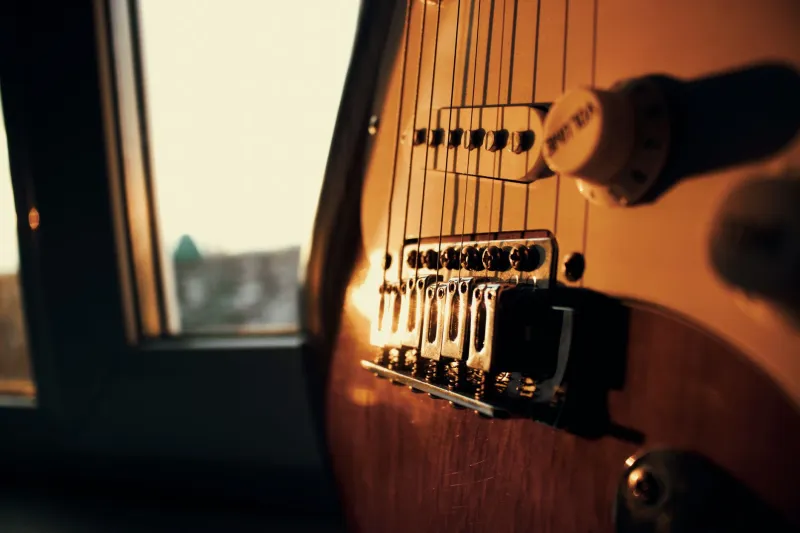
Eddie's guitar tone on the early albums, often called the "brown sound" by fans, has been analyzed, reverse-engineered, and obsessed over for decades. He achieved it through a combination of a modified Marshall amplifier (famously rewired to his own specifications), a homemade guitar he'd built himself, and a variac — a voltage regulator that allowed him to run the amp at reduced power, changing the way the tubes responded and softened the attack.
The exact signal chain shifted album to album, but the underlying philosophy stayed consistent: Eddie wanted warmth. He wanted a tone that had weight without becoming muddy, sustain without losing articulation. That's a harder balance to strike than it sounds, and most players who've tried to recreate it have ended up with something that's close but never quite there.
In the studio, Templeman and Landee reportedly placed the microphone slightly off-axis from the speaker cone — a small tweak that helped capture the bloom of the tone rather than its harshest frequencies. Simple in theory. Critical in practice.
Fair Warning and the Shift Toward Darkness
Not every Van Halen album was made under the same conditions or with the same intentions, and that's worth acknowledging. The third album, Women and Children First (1980), pushed the band toward a rawer, more aggressive sound. Fair Warning (1981) went further — darker, more experimental, with Eddie beginning to integrate synthesizer textures and studio effects in ways that would fully bloom on 1984.
The production on Fair Warning is genuinely underrated. Tracks like Unchained feature a guitar tone that's slightly more brittle and angular than the warm crush of the debut — and that was deliberate. The album has an anxious, unsettled energy that comes partly from the performances and partly from the way Templeman and Landee chose to present them. Less room sound, more isolation. The drums feel closer. The guitars feel more confrontational.
It's the sound of a band that had figured out comfort and chosen to reject it.
1984: When the Synthesizer Became the Story
By the time the band got to 1984, the recording process had evolved significantly. Eddie had built his own studio — 5150, named after the California police code for an involuntary psychiatric hold, which tells you something about his sense of humor — and having that kind of control changed everything.
The album's opening title track, that cascading synthesizer piece that became one of the most recognizable intros in rock history, was recorded in Eddie's home studio and initially wasn't even intended as an album opener. It was something he'd been noodling on privately. The decision to lead the album with it was a statement of intent: this band wasn't going to be pigeonholed.
Jump, of course, became the commercial centerpiece — built around a keyboard riff Eddie had written years earlier and that David Lee Roth had resisted putting on record because he worried audiences wouldn't accept a keyboard-led Van Halen song. He was spectacularly wrong about that, and the production reflects a band at the peak of their confidence. The mix is enormous, the keyboards sit right up front without apologizing, and the whole thing sounds like it was designed to come out of a car radio at maximum volume.
The Analog Advantage
One thing worth appreciating about all of these records is that they were made entirely in the analog domain — tape machines, tube amplifiers, physical rooms with physical acoustics. There's no grid to snap performances to, no pitch correction running in the background, no option to comp together the perfect take from twenty mediocre ones.
What you hear is largely what happened. And in a weird way, that constraint produced something that digital production often struggles to replicate: the sense that human beings are playing these instruments in real time, making small adjustments and micro-corrections that give the music a kind of breathing quality.
Modern engineers and producers still study these albums. Not to copy them — you can't really copy them, the technology doesn't exist the same way anymore — but to understand the philosophy behind them. Capture over construction. Energy over perfection. Trust the band.
It worked pretty well, all things considered.